The L&G Gerd Kommer Multifactor Equity UCITS ETF is unique: a All Cap- and All Market-ETF with innovative regional weighting and integrated Factor investing. Translated, this means: an ETF on the “World AG“, which is at the Country weighting both those Market capitalization as well as that economic performance (GDP) taken into account, Factor premiums overweight and one ultra-wide Diversification with over 4,000 stocks.
The Gerd Kommer ETF is as accumulating variant (WKN: WELT0A) and distributing variant (WKN: WELT0B) Available at all major banks and brokers - many of which also offer it as a free savings plan to. Learn more
If you want to know more about the underlying Gerd Kommer Multifactor Equity Index If you would like to find out more, we recommend our blog post „The Gerd Kommer ETF”. If you want to understand all the technical details, we recommend the Index methodology or the Quarterly Index Summary.
The Gerd Kommer ETF is a pure stock ETF that represents the risky stock part of Gerd Kommer's world portfolio concept in a single fund (1-ETF solution).
In our opinion, if you want to invest exclusively in stocks (100/0 portfolio), you don't need any other products in your portfolio. This makes the Gerd Kommer ETF an all-in-one investment solution.
For lower-risk portfolios, i.e. those that do not consist 100% of stocks, we recommend adding a bond ETF. We describe how this works in our blog post “Gerd Kommer’s global portfolio — invest confidently with ETFs”.

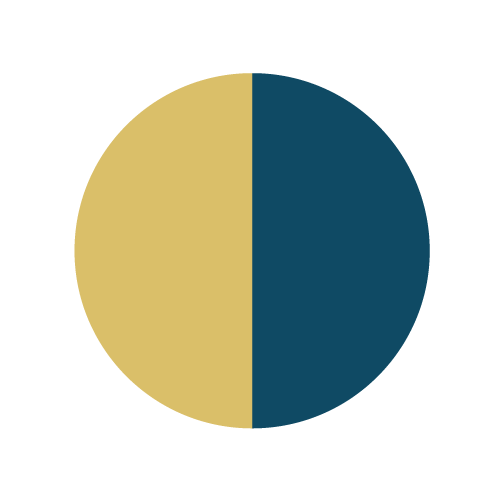
The Gerd Kommer ETF uses an innovative country weighting method that we developed specifically for the Gerd Kommer Index: The weighting of each country is determined 50% by its market capitalization and 50% by its economic output (GDP).
The Gerd Kommer ETF is current (as of mid-2025) the only ETF available in the DACH region is based on a passive index whose country weighting is based on the economic performance of the countries taken into account. The few available portfolio funds in the traditional fund shell usually only implement GDP weighting at the regional level, which you could also implement yourself using several ETFs. This ETF, on the other hand, takes the actual country level into account, i.e. h. He also differentiates within the major world regions of North America, Western Europe, Asia-Pacific and the global emerging markets.
This GDP weighting in particular mitigates the cluster risk in the USA (from currently over 60% in the MSCI ACWI IMI to around 45% [as of mid-2025]) and in particular increases the share of emerging markets (from currently over 10% in the MSCI ACWI IMI to around 20% [as of mid-2025]) compared to pure weighting based on market capitalization. Ours provides more background information YouTube video on the topic of cluster risk in the USA.
The Gerd Kommer ETF is a Multifactor ETF, which overweights so-called factor premiums compared to a market-neutral (plain vanilla) passive equity index (e.g. the MSCI ACWI). He follows you integrated Multifactor approach, i.e. h. all factor premiums taken into account are in one individual index instead of mapped across multiple indices.
Factor premiums are characteristics of stocks identified by scientists that are intended to explain their returns. In the Gerd Kommer ETF the factor premiums Size, Value, Quality, Investment and Momentum integrated.
In our blog post “The Gerd Kommer Multifactor Equity ETF" we will go into more detail about how factor premiums are taken into account in the Gerd Kommer ETF. If you would like to find out more in-depth information about factor investing in general, you should read the following of our blog posts: “Factor investing – the basics”, “Integrated Multifactor Investing”, and “The Pains of Factor Investing”.

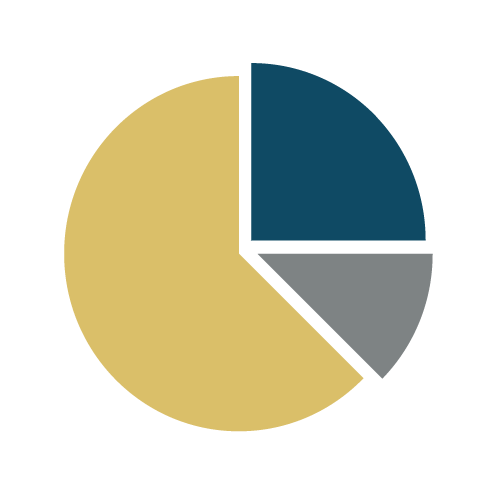
Regarding the Size dimension of the underlying stocks, the Gerd Kommer ETF includes not only medium-sized and large companies (mid and large caps), but also small companies (small caps), measured by their market capitalization.
This is not the case with many common indices such as the MSCI World, the MSCI ACWI or the FTSE All-World, i.e. h. This does not take smaller companies into account.
The Gerd Kommer ETF is an all-cap ETF and therefore completely reflects the overall market with regard to all company sizes (with the exception of the smallest and illiquid micro caps).
Regarding the regional Dimension, the Gerd Kommer ETF not only contains industrial country stocks (developed countries or developed markets stocks), but also emerging market stocks.
This is not the case with many common indices such as the MSCI World or the FTSE Developed World, i.e. h. only industrialized country stocks are taken into account. In fact, emerging markets account for over 10% of global market capitalization, around 40% of global economic output and over 80% of the world's population (as of mid-2025). This gives more background on emerging market stocks Blog post.
Together with the all-cap feature, the Gerd Kommer ETF can therefore be described as an all-cap all-market ETF, which reflects the entire global stock market as completely as possible.

The Gerd Kommer Index contains around 5,000 individual stocks. In addition, the maximum weight on each adjustment day is limited to 1% per company in order to avoid concentration risks. Furthermore, the special GDP country weighting method means there is greater diversification across countries than with conventional stock ETFs. We call that Ultra-diversification.
The Gerd Kommer ETF selects from around 5,000 individual stocks in the index optimized sampling over 4,000 individual titles. As the fund volume in the ETF increases, this number can be further increased over time. The aim of portfolio management in the ETF is to follow the index as precisely as possible while at the same time keeping transaction costs low for investors.
The Solactive Gerd Kommer Multifactor Equity Index NTR on which the Gerd Kommer ETF is based contains a CO2 filter (screen). The top 3 percent of companies in eleven main sectors with the highest greenhouse gas intensity relative to company value are excluded.
Companies that do not meet the minimum standards for globally recognized business practices with regard to key sustainability aspects are also excluded. These include violations of United Nations regulations, the most severe sustainability violations (“Severe ESG Controversies”), the production of controversial weapons and coal manufacturers.
The ETF thus takes into account key sustainability aspects on which there is most consensus, but does not go as far as most sustainable funds in order to avoid the necessary compromises in diversification or return expectations.


“Losing stocks” are excluded from the Gerd Kommer ETF. This includes companies that have recently had their initial public offering (IPO) and stocks with a securities lending rate that is significantly higher than the market. On average, such stocks have a lower expected return over time.
Like any other exchange-traded fund, the Gerd Kommer ETF can have a Securities deposit at a bank or an online broker be acquired. In the securities account you either choose the accumulating variant with the WKN WELT0A, in which income is automatically reinvested, or the distribution variant with the WKN WELT0B, where dividends are paid.
The purchase is possible both by One-off investment as well as about one Savings plan possible. Many brokers offer savings plans starting with small monthly amounts.
The accumulating share class (WKN WELT0A) reinvests income automatically while the Distributing share class (WKN WELT0B) Pays dividends to investors.
Both variants are based on the same index and have an identical composition. The choice depends solely on your personal need for reinvestment or current income.
The so-called loser screen specifically filters out stocks with historically unfavorable return and risk characteristics. These include, among other things, very young initial public offerings (IPOs) and stocks with exceptionally high securities lending rates, which often indicate speculative market positioning. This filter is intended to prevent speculative stocks with demonstrably poor long-term performance from being included in the portfolio. The selection is not made as part of active management, but rather on the basis of a clearly defined, rule-based decision catalog.
The 1% cap is set via a quarterly, rule-based rebalancing implemented. If a share exceeds this limit due to price gains, its weight is reduced again to a maximum of 1% as part of the index adjustment. This means that the portfolio structure remains broadly diversified and cluster risks are systematically limited.