
Tue Alexander Weis e Selina Gschichtmann
Questo articolo del blog è a breve introduzione all’investimento passiveo. You offer a panoramic sintetica sull'investimento con ETF and this desidera orientarsi rapidamente sull'argomento.
The article is presented in a conoscenza di base del mercato azionario. It is significant that it is necessary to have a general idea of the same language, a commitment and an ETF and also have a conoscenza di base di concetti come rendimento e rischio. (Chi desidera rinfrescare le proprie conoscenze in materia può consultare il nostro Glossary, in what we see in technical terms that are important in the field of patrimonial investments).
In a first phase there is a panoramic view of the principal forms of investment, in a second phase there is an illustration of the return and the investment. Successivamente affronteremo the domanda cruciale dell'investimento ("voglio essere un investitore attivo or passive?") and mostreremo perché l'investimento passiveo è l'alternativa migliore agli approcci attivi. Infine, presenteremo a “ricetta” for a portfolio passive composto da soli due ETF: this is exactly what it is.
This is familiarity with the basis of the passive investments, consigliamo il nostro articolo del blog un po’ più avanzato “Factor investing – the basis”.
Lei è convinto dell’investimento passive e vuole metterlo in pratica in modo semplice e comodo? Abbiamo the solution 1-ETF di Gerd Kommer: l’L&G Gerd Kommer Multi-factor Equity UCITS ETF. Per saperne di più >
Iniziamo!
Classi di asset – una panoramica
Per evitare malintesi, ecco una premessa: in this articolo ci occuperemo esclusivamente di attività liquide, ovvero escluderemo tipi di attività come il capitale humano, the partecipazioni societarie or i diritti pensionistici. The ragioni sono due: in primo luogo, the dibattito attivo-passivo è irrilevante per la maggior parte dei tipi di patrimonio illiquido, perché alla fine possono essere gestiti solo attivamente, and in secondo luogo, ciò andrebbe oltre lo scopo della nostra piccola introduzione.
What is the asset class? The classi di asset (classi d'investimento) also has a logic for attività and is also relatively similar in terms of return, balance and liquidity.
This is a panoramic view of the most important asset classes:
- Azioni: partecipazioni azionarie in società quotate in borsa
- Obligations: credit negotiations in the stock exchange of Stati or Società
- Real estate: residential and commercial properties
- Matter prime: natural sources come from petroleum, metal base or prime agricultural matter
- Metallic prizes: sotto group of the prime matter (come gold, silver or platinum)
- Other collections: art, luxury cars, luxury watches, vintage wines, etc.
- Criptovalute: Bitcoin, Ethereum, Tether, ecc.
Queste sono the classi di asset in cui è possibile investire come privato investor with a sforzo accettabile and a costi ragionevoli.
Contrariamente a quanto si crede, the deposito bankcario is not a class of asset, ma a prestito non garantito dal depositante all'istituto di credito.
The financial products also come with a capital insurance policy, real estate assets, private equity, hedge funds, investment funds and ETFs that are not in the same class of assets as they are, but only “imballaggi” per vere and ownership of the asset class. Questi “gusci” not sono di per sé negativi and si difference principalmente per il loro spessore, con gli hedge fund (spessi e costosi) a un'estremità dello spettro e gli ETF (sottili ed economici) all'altra. For many finanziari products, the confezionamento comporta non solo costi e perdita di trasparenza, ma also rischi aggiuntivi che the classe di asset non ha nemmeno all'interno del prodotto finanziario stesso.
Andiamo advance!
Rendimento e rischio – Quali sono the classi di asset migliori?
To take a risk in all aspects of the asset class, it is necessary to have the first opportunity to ensure effective investment. Di norma, the risposta sarà: “Ottenere il massimo rendimento possibile with il minimo rischio possibile”. Pertanto, nella Tabella 1 diamo uno sguardo al rendimento e al rischio delle nostre classi di asset principali (le criptovalute non sono incluse nella table a causa della loro storia troppo breve; i mercati da Collezione non sono inclusi a causa della mancanza di dati disponibili):
Table: 1: Returns on long dates according to the inflation of the principal asset classes (in USD) from 1900 to 2021 (122 years)
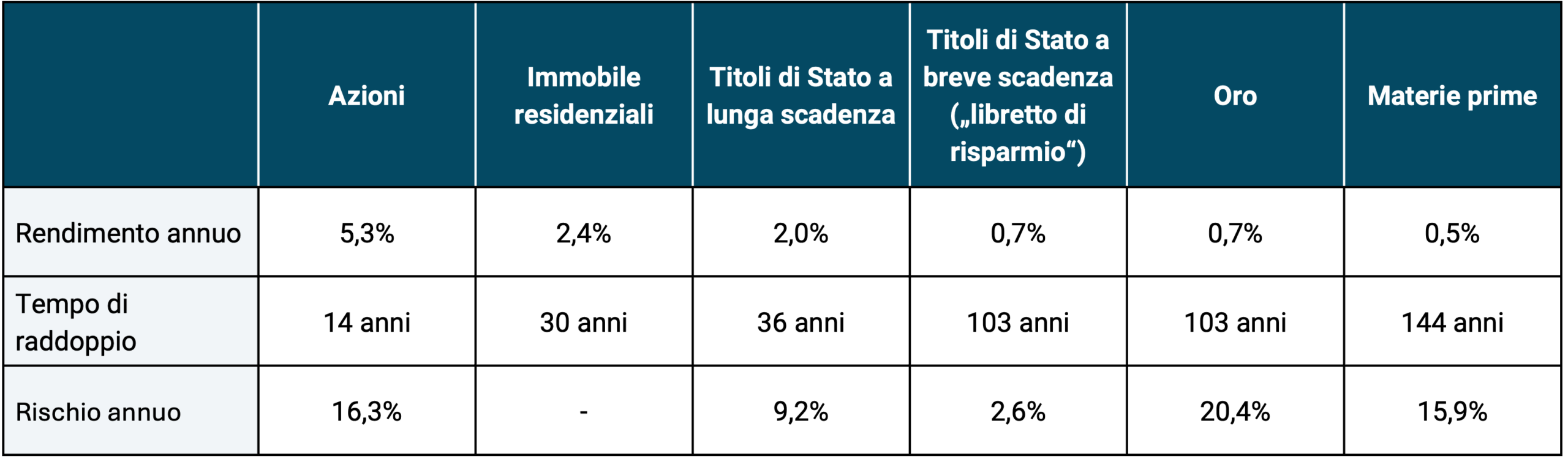
► Data: Dimson, Marsh, Staunton (2022); Morningstar; David S. Jacks (oro, matter prime) ► Senza costi e tasse (considerati i costi di mantenimento degli immobili) ► Tutti i rendimenti in dollari USA (ad eccezione degli immobili residenziali - vedi sotto) e rendimenti totali (somma dei redditi correnti + aumento del valore) e corretti per l'inflazione ► Rendimenti degli real estate residenziali: periodo di scostamento dal 1900 al 2017 e media ponderata in base alla population dei rendimenti di nove paesi occidentali in valuta locale (motivo: mancanza di dati disponibili), esclusi i costi di transazione che riducono il Rendimento in caso di acquisto e vendita ► “Tempo necessario per raddoppiare”: numero di anni necessari affinché an investimento initial una tantum si raddoppi al rendimento medio dato (senza costi e tasse) ► “Rischio”: deviazione standard dei rendimenti dell’anno solare (volatilità) from 1975 to 2021. For the real estate is not indicative of high value, although the real assets are not available, “ones” and comparisons in the same way with the other asset classes.
If you can't wait in the table? Innanzitutto, if you note that the number is so probabilmente that the lower quantity of the major part is not supported. One of the motives is what the real returns are, over the net dell'inflation. Another motivation is the media, the Internet and the library in general that Hanno has finished with an idea of the realization of realistic results. The number and crudi of the table are the same as in the market for the capital Hanno, which has been produced since the end of 120 years, in terms of performance, illusion and fantasy. If you are still there, you will continue to live with this real thing, but you will not be able to see it further.
In the second luogo, è chiaro che the azioni offrono di gran lunga and rendimenti più elevati tra tutte the classi di asset: the double rispetto agli real estate, due voltage and mezzo rispetto ai titoli di Stato a lungo appointments e sei volte rispetto all'oro e ai libretti di risparmio. 👊🏻
In the third place, the fat of the title of the Stato emerges in accordance with the class of the asset with the lowest weight in assoluto, also in this case with an ample margin.
Is it possible for you to do this? The reason for this is that the massive return to the proprio denaro does not prescindere the azioni. Tuttavia, poiché the major part of the investitors is not in grade or not desidera convivere with the forti oscillazioni delle azioni, an investimento azionario dovrebbe essere integration da un'aggiunta meno volatile. Due to the high intensity of the flooding, the obligation to meet the deadlines of high quality or deposits of fruit banks (purchase the import of the loor without the guarantee of the deposits statale) is also suitable for this purpose.
Questo per quanto riguarda le schermaglie preliminari – ora è il momento di passare all’azione!
Investimenti attivi vs. passivei – la domanda cruciale
The aim is to invest in the property in terms of funds or obligations in the wallet, primarily from the front of all the property, which is in this sense an approach to investing attitudinally or passively. Does this consist of investment assets and passive assets? (Per semplificare il più possibile la questione, ci limiteremo di seguito inclusive all azioni, tralasciando il mercato obbligazionario).
In parole povere, a passive investor acquires the “mercato” (nel nostro caso il mercato azionario). All the best of the year there are quindi il rendimento del mercato (al net of the costs of investment) and it è quindi complete esposto all oscillazioni di mercato. (“Acquistare il mercato” is possible attraverso l’acquisto di uno or più ETF). As you can see in the precedent, the retail market is able to get a 5% annual return on the net inflation, with the control of the impost and cost.
An investitore attivo, invece, not si accontenta del rendimento del mercato e ritiene che sia possibile battery sistematicamente il mercato. Si può cercare di Farlo acquire the azioni che si ritiene avranno andamento migliore rispetto al mercato (“stock picking”) or “entrando” nel mercato ogni volta che è al minimo e ‘uscendo’ poco prima del prossimo presunto crollo (“market timing”). The investment attivo is inevitabilmente always in the form of stock picking, market timing or a combination of entries. It is possible to invest at the same time as an investor in the regia propria with the formula fai-da-te (“DIY”) or have access to a consultant (as a bank or a patrimonial manager).
The crede nell'investimento attivo e non vuole essere un investitore fai-da-te può affidarsi a un gestore del fondo, un patrimonial administrator or a bank, pagando commissioni relativamente elevate, sia aperte che nascoste (difficili da individuare).
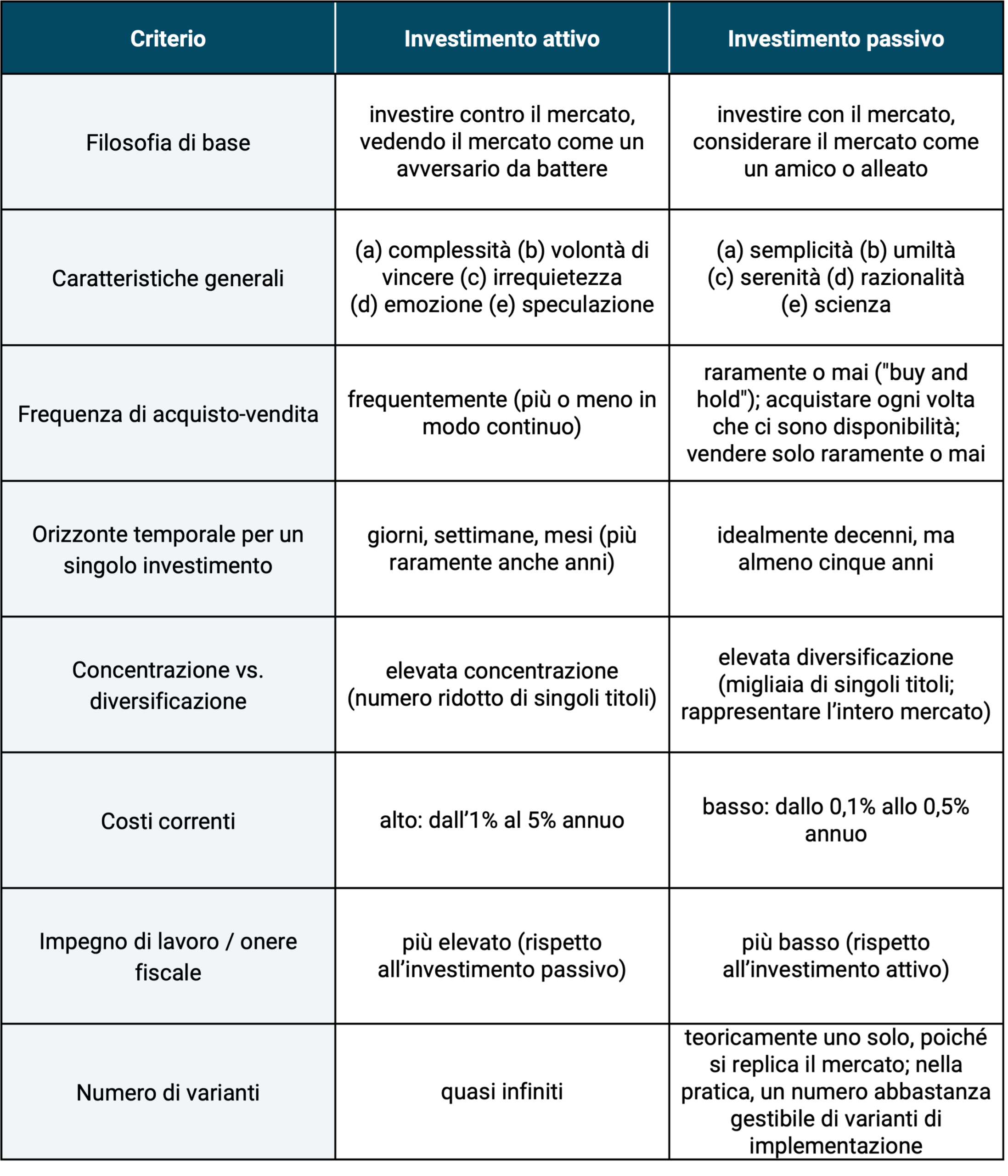
For each color, this is also the case in this metafore, which creates the table 2, in which the difference between the investment and the passivo is also illustrated in a very concise and coherent way:
Table 2: The major differences between investments and passives
►Fonte: The easy entry into the world of ETFs by Gerd Kommer
Allora perché investire in modo passiveo?
La risposta breve è: perché è più redditizio.
Questa affermazione non è nostra, ma proviene dal world scientifico. Last year, 60 years ago, the state published a letter from the study of Hanno to improve the statistical superiority of passive investments.
Tuttavia, poiché dal punto di vista di fornitore di servizi finanziari è possibile guadagnare molto di più with l'investimento attivo che con quello passive, the settore finanziario traditional - scienza o meno - offre quasi esclusivamente investimenti attivi.
Also through the traditional media and Internet, the investment investment is much more redditizio, but the story is based on all the investment investments and all the speculative consent of other people, with a high-altitude adjustment or a high-click key, without the voice of the speakers Pubblicitari generate dai fornitori di prodotti finanziari gestiti attivamente.
Le prove scientifiche che dimostrano la superiorità dell'investimento passive rispetto a quello attivo sono in ogni caso letteralmente schiaccianti. Tuttavia, without limitarci a supposizioni, nella nostra argumentation ci riferiamo a un argumento teorico e un empirico tratti dalla scienza e lasciamo che siano i numeri a parlare.
Theoria: L'aritmetica dell'investimento attivo
The calculation of the investments is based on the fact that the devon investors generally complicate the return of the market, according to the definition of the constitution of the market. It is significant that the 50% of the imported investments are generated by an inferior return and the other 50% and a superior return on the returns from the market. È importante sottolineare che si tratta di una necessità matematica che non può essere contestata. It is therefore not necessary to have additional information on the costs, the imposte and the composition or the comportamento of the operators of the market.
Torniamo all’argomento: this is significant – al lordo dei costs (!) – the 50% of the investment investments deve Sovraperformare the market and, vice versa, the 50% deve sottoperformare il mercato. Supponiamo inoltre che l'investimento attivo comporti costi più elevati rispetto all'investimento passiveo - vedi “Costi correnti” nella Table 2 - la percentuale di investitori attivi che battono il mercato deve essere compresa tra lo 0% e il 50%. Pertanto, the probabilità puramente statistica di sovraperformare the mercato è netamente inferiore al 50% and è quindi inferiore alla probabilità di Vincere in a duello a testa o croce. To look at the percentage in real practice, in a collegamento and diamo un’occhiata alla nostra argumentazione empirica.
Empirismo: the outperformer is also affidabili quanto lo zero alla roulette
The practical part of our argument is based on a studio of S&P Dow Jones Indices, one of the major fornitori di indici al mondo, the title is also complicated.Standard & Poor's Index Versus Active", o in breve "SPIVA". The studio confronted the performance of the fond gestiti attivamente with a benchmark passivo equo, consentendo di trarre conclusioni sul successo dell'investimento attivo in diversi periodi di tempo e aree geographical. (Esistono numerosi studi comparabili che giungono a risultati similarili, ma abbiamo The SPIVA studio is one of the most popular versions of the same genre, which has been working for several years since 20 years and is accessible to the public free of charge).
Dallo studio SPIVA can do the main thing due to the conclusion:
- The outperformer is also a minor figure: the percentage of the funds used is at the highest level in the loro benchmark passivo è state in the media of 40% around the region (in industrial areas and in the south) between the end of three years, from 2019 to 2021, and only the 10% around the end of 20 anni, dal 2002 al 2021 (the entity and the number of the fondi sottoperformanti aumenta with the allungarsi del periodo di osservazione). This is the result of all the non-investment in this minor issue, which is the port of the second conclusion.
- Raramente gli outperformer restano tali: the composition of the fondi che riescono a superare the proprio benchmark cambia da an all'altro period in modo più or meno casuale. The greater 25% of the backgrounds were produced in 2017, only 62% and a further 25% in the year 2018; In 2019 the percentual era was 37%; The 2020 era was only 28% and the 2021 era was 1.7%, but it was also individual with a little influence. (Nel caso dei fondi obbligazionari, la percentuale è scesa allo 0% già nel terzo anno successivo, il 2020). The popular method of investing solely in the background of Hanno's history will result in positive positive results that are destined to fall.
Let's just say this conclusion, a view that is largely significant, and concludiamo così the nostra argument against the investment attivo and a favore di quello passive. This is not a part of the convinti of the vantaggi of the passive investments and/or desidera leggere ulteriori arguments against the investment attivo and a favore di quello passive, è invited a leggere il nostro articolo sul blog “The motivation behind these investments is non-functional“.
The abbiamo già convinta, ne siamo lieti e, come ringraziamento, abbiamo in serbo per lei una chicca davvero speciale: a semplice ricetta for a portafoglio passive gustoso e succulento composto da soli due ETF.
Come funziona l’investimento passive?
The investment passivo is simply in line with the principle of the investment of the funds indicated in the years ’70 and the ETF come as a variant of the funds indicated in the years ’90. In sostanza, that's it fare due cose:
in the first place, determine the ripartition percentage of the proprio portafoglio tra la parte a rischio e quella a basso rischio (ad esempio 60/40) e, in secondo luogo, riempire the due parti del portafoglio con ETF specifici.
Questa asset allocation statica implementata su una rigorous logica Buy and Hold (“comprare e detenere”). The Buy and Hold is part of the investment passive and the amount of global diversification attributable to the use of funds indicizzati ed ETF.
Questo is the concept of the global portfolio of Dr. Gerd Kommer, derivato dalla scienza. In this case, it is sufficient to have an ETF product for the part of the portfolio and also for the part of the rischio. The illustration is in seguente graphic.
Grafico: Rappresentazione schematica del portafoglio global
►Fonte: The easy entry into the world of ETFs by Gerd Kommer. ► (*) Conto current account only se l’importo rientra nella garanzia sui depositi statale di un paese con un rating di credito di almeno AA.
The quota of the portafoglio rischiosa (“RBT”) is the motor of the rentimento responsabile della generation of the rentimento of the portafoglio”, which is the quota of the portafoglio priva di rischi (“risk-free”) (“RFT”) funge da “ancora di sicurezza”. Chiamiamo questa dicotomia allocation level 1. In line with the principle, it is possible to allocate 100% of the quota of the rischiosa portafoglio (“portafoglio 100/0”) to 0% of the rischiosian portafoglio’s quota (“portafoglio 0/100”), so the sole solution is optimally si trova da qualche parte nel mezzo, poiché solo Pochi investors prefer the extreme allocations.
The position specific to determine the balance sheet of investments in the RBT-RFT spettro (quota di portafoglio rischiosa - quota di portafoglio priva di rischi) differs principally from quattro variabili: rendimento atteso, propensione al rischio, fabbisogno di liquidityità e orizzonte di investimento. Maggiore è l'incidenza di queste variabili (ad eccezione del fabbisogno di liquidità), più rischiosa (“aggressive”) potrà essere the composition of a portfolio. Viceversa, if the variables are as small as the mark, they should be initiated with a level allocation of 1 meno rischiosa (“più conservativa”).
The variables differ from each other in the terms of intensity, based on the orientation, even initially, on the other hand, in a conservative way, not in successive years, a personal voltage acquisition with the portafoglio, in the final and gradual process.
A voltage decision is made to allocate level 1, it is necessary to decide on the ETF specification: the question is the same allocation level 2. In this simple form, it is realized with an ETF for the RBT and one for the RFT. The RBT can also be used by the global market, the ETF RFT should contain only obbligazioni i) with a scadenza residua breve, ii) with an elevated rating of credit and iii) in the national value of the investors, al fine Aspire to all the functions of removing the rischio.
Nella in this form is simple, a portafoglio di questo type potrebbe presentarsi come segue:
- Quota di portafoglio rischiosa (“RBT”): Vanguard FTSE All-World UCITS ETF (ISIN: IE00BK5BQT80) [a partire da: settembre 2022] o L&G Gerd Kommer Multi-fattore Equity UCITS ETF (ISIN: WELT0A)
- Quota di portafoglio priva di rischi (“RFT”): Lyxor EuroMTS Highest Rated Macro-Weighted Govt Bond 1-3Y (DR) UCITS ETF (ISIN: LU1829219556) [set 2022]
Alternatively, the part of the portafoglio a basso rischio potrebbe is also presented as a current account or an account for deposit on a termina presso una banca, a condition that the import of investment is rientri nella guarantee on deposits statale di 100,000 euros per or combinazione cliente-banca.
If you are notified by notaries, you are not required to accept the investment, but only in a way that you can easily attribute an approccio to the passive investment. The global portafoglio is extremely perfect for a picture (as it is combined with cosiddetti premium di fattore; tuttavia, reflect the theory and practice on the basis of the cosiddetto factor investing andrebbe oltre lo scopo di this article).
A voltage that defines the portfolio and acquires the ETF, it is possible to verify a regularly scheduled allocation interval of 1 without the additional discount of the target allocation that is also desired at a long period of time. The motivo is the ricercarsi inlle fluttuazioni di mercato a cui un portafoglio (in particolare the RBT) è esposto giorno.
Conclusions
In this article it is possible to achieve the same quality as the class of activity and the quality of the device as well as present in the portafoglio. Per the strategic direction of the private investors, a mix of actions come from “motore di rendimento” and obbligazioni come “ancora di sicurezza” nel portafoglio dovrebbe essere adeguato. Successfully abbiamo affrontato il dibattito sull'investimento attivo e passiveo, esaminando the difference tra i due approcci e dimostrando, sulla base di argomenti teorici e pratici, perché l'investimento passiveo è l'alternativa migliore rispetto a quello attivo. Infine, abbiamo esaminato l'attuazione pratica di un portafoglio passiveo (spesso denominato che “concetto di portafoglio global” by Dott. Gerd Kommer) and abbiamo sottolineato the importanza of the principle of ribilanciamento.
Invest in a globally significant portfolio that meets the needs of the global economy and its capital. With the capital of the company, the company's quota of 10,000 is in stock, in fact the world has the right to be saved and serviced by the people on the left side of the piano tenore di vita rispetto alla generation dei loro genitori. Per the fornitura di capitale di rischio sotto form di azioni e obbligazioni, the investor of the global portfolio viene ricompensato with a rendimento adeguato al rischio.
Letteratura
Dimson, Elroy; Marsh, Paul; Staunton, Mike (2019): “Credit Suisse Global Investment Returns Yearbook 2018”; versione lunga; Credit Suisse Research Institute; 256 pages
Kommer, Gerd (2018): “Invest confidently with index funds and ETFs. How private investors win the game against the financial industry”; Campus Verlag, 5° edizione, 2018 (prima edizione 2002); 415 pages
Gerd Kommer (2022): “The easy entry into the world of ETFs: Uncomplicated provision – a starter book for financial beginners”; FinanzBuch Verlag, 1° edizione, 2022; 180 pages
Kommer, Gerd; Weis, Alexander (2019): “Factor Investing – the Basics”; post on blog; maggio 2019; link: https://gerd-kommer.de/it/blog/factor-investing-le-basi/
Kommer, Gerd; Weis, Alexander (2020): “The motives for investing in investments do not work well”; post on blog; February 2020; link: https://gerd-kommer.de/it/blog/dieci-motivi-per-cui-gli-investimenti-attivi-non-funzionano-bene/
S&P Dow Jones Indices LLC (2021): “Standard & Poor’s Index Versus Active”; December 2021; link: https://www.spglobal.com/spdji/en/research-insights/spiva/